
Grade 5 · Geometry · 5.G.B.3
Classifying Figures in a Hierarchy Worksheets
Free, printable, and ready to teach: a practice worksheet, homework, an exit ticket, and an answer key with step-by-step solutions — plus lesson slides you can edit. No sign-up needed.
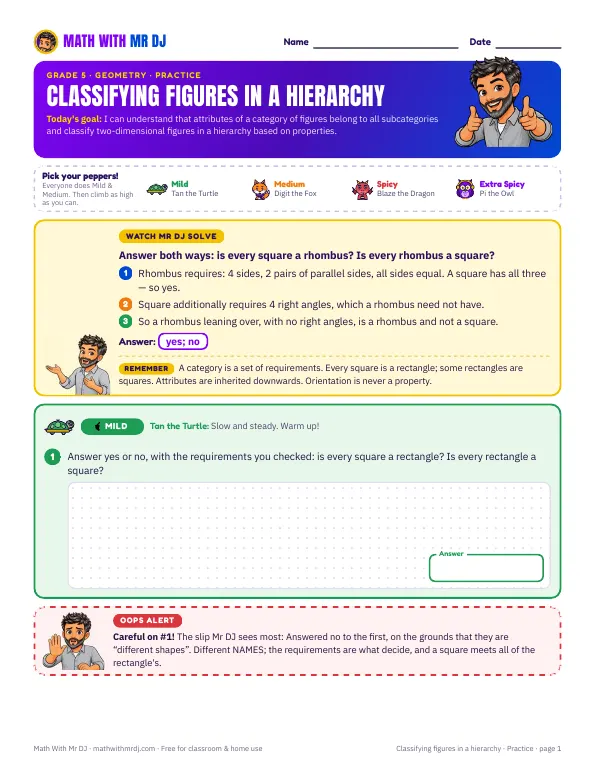 Open the practice worksheet
Download free
- PDFPractice worksheet4 pages · 9 questions
- PDFExit ticket3 pages · 4 questions
- PDFAnswer key with step-by-step solutions8 pages · covers every sheet
- PDFLesson slides8 slides · print or present
- PPTXEditable slidesPowerPoint · opens in Google Slides & Keynote
PDFs print on US Letter paper. Free for classroom and home use.
Step-by-step math videos on the Math With Mr DJ YouTube channel →Key idea
A category is a set of requirements. Every square is a rectangle; some rectangles are squares. Attributes are inherited downwards. Orientation is never a property.
Sample problems
- Answer yes or no, with the requirements you checked: is every square a rectangle? Is every rectangle a square?
- Answer both ways: is every square a rhombus? Is every rhombus a square?
- Is every rectangle a rhombus? Is every rhombus a rectangle? Draw an example for each answer.
- Name two properties a square inherits, and say which category each comes from.
Common mistakes to watch for
- Answered yes to both, or no to both. The two questions have different answers, and treating them as one question is the error the whole sheet is about.
- Named a property that squares have and rectangles do not, such as all sides equal. That one is NOT inherited — it is the extra requirement that makes a square a special rectangle, so it has to be stated rather than passed down.
- Corrected Tam with the fact (“a square IS a rectangle”) and no argument. That is another item for the list he already has — and asserted flatly it will not survive, because it contradicts every picture he has been shown. The requirements checklist is what makes it his own conclusion.
The answer key explains each one, so you can tell what a wrong answer means.
How to use this set
- Teach with the slides (about 15 minutes), or watch the video together.
- Practice with the worksheet. Questions climb from fluency to application to reasoning.
- Check understanding with the exit ticket.
- Mark with the answer key — each answer shows the steps and the most likely mistake.
More Grade 5 worksheets
All Grade 5 →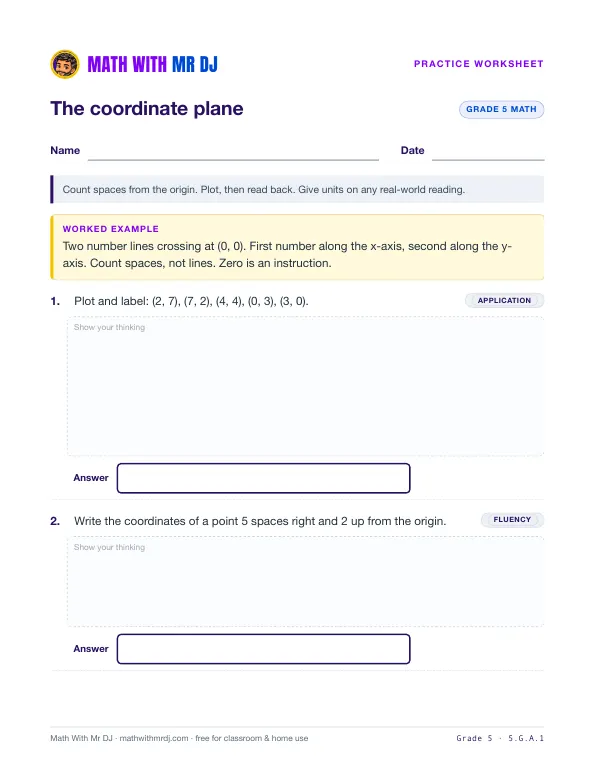 The Coordinate Plane5.G.A.1 · Practice · Exit ticket · Answer key · Slides▶ Video lesson
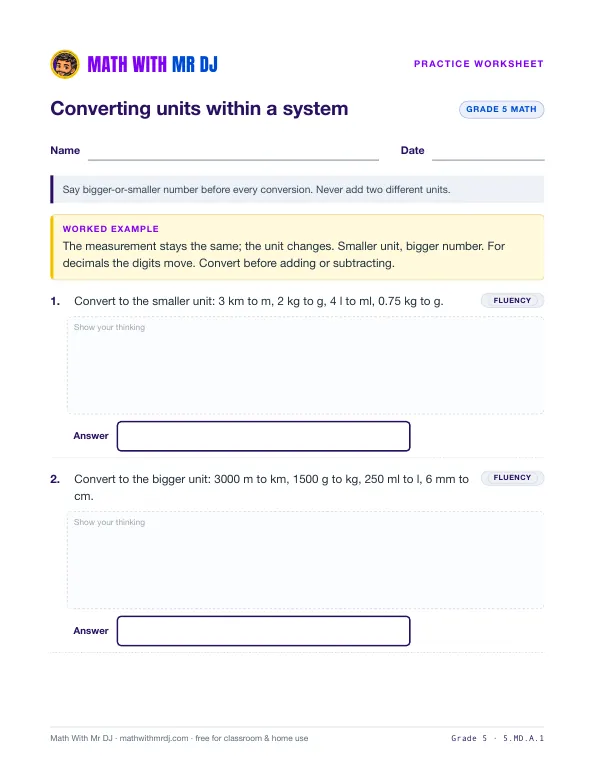 Converting Units Within a System5.MD.A.1 · Practice · Exit ticket · Answer key · Slides
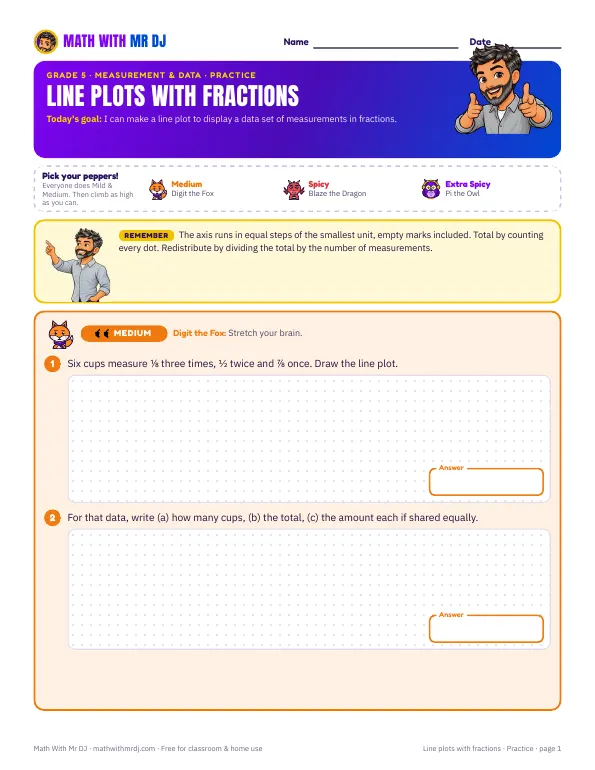 Line Plots with Fractions5.MD.B.2 · Practice · Exit ticket · Answer key · Slides
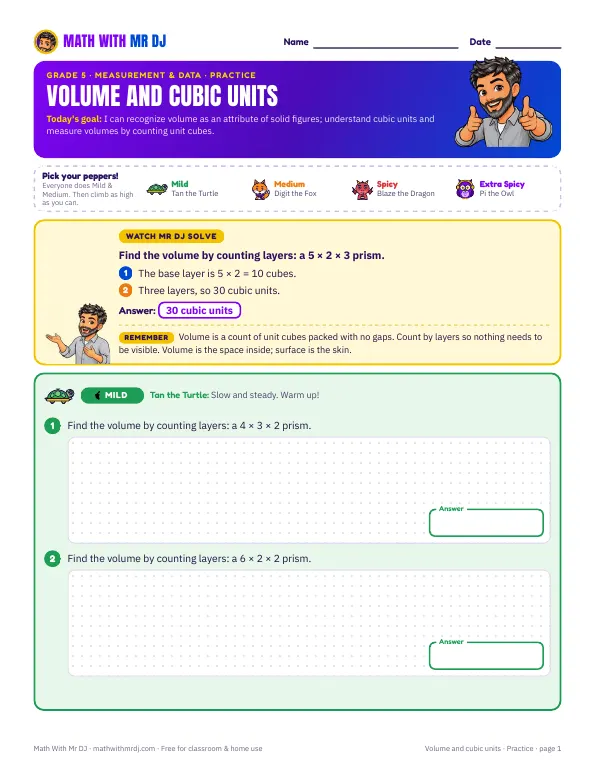 Volume and Cubic Units5.MD.C.3 · Practice · Exit ticket · Answer key · Slides
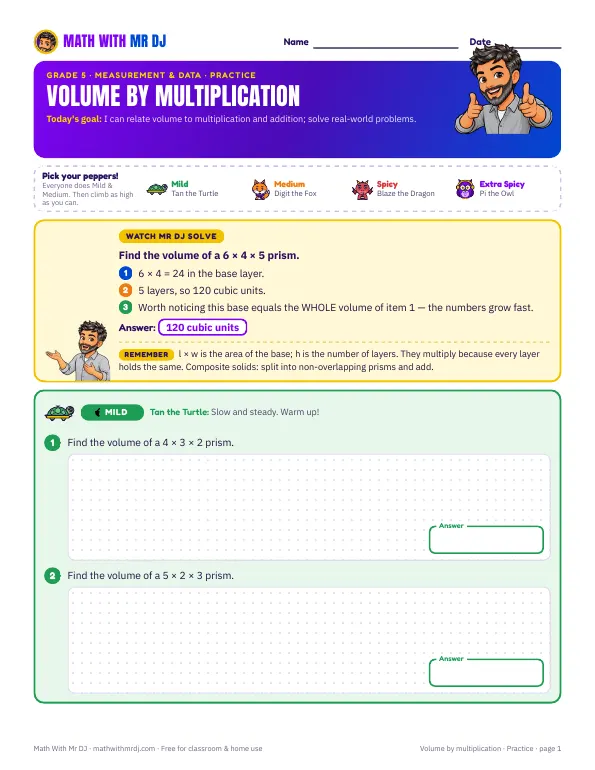 Volume by Multiplication5.MD.C.5 · Practice · Exit ticket · Answer key · Slides
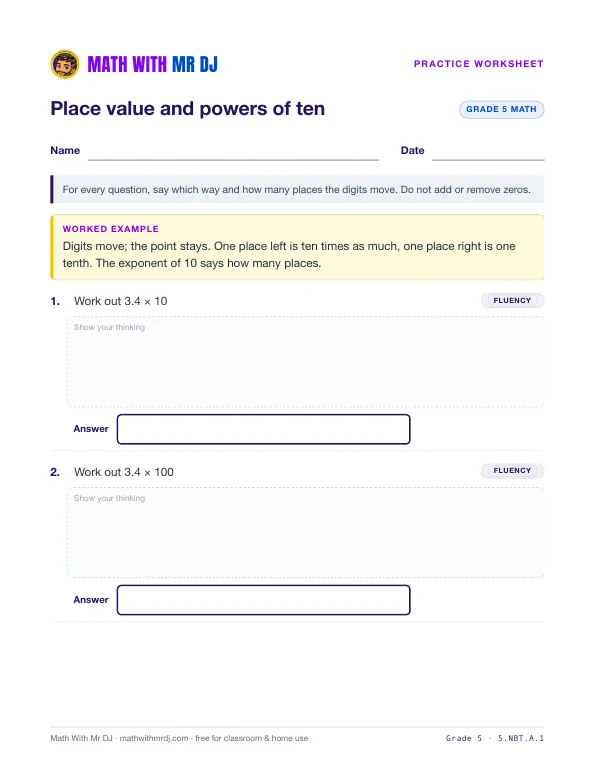 Place Value and Powers of Ten5.NBT.A.1 · Practice · Exit ticket · Answer key · Slides▶ Video lesson


Get new worksheets first
New worksheets, videos, and free resources from Mr DJ — about once a month. No spam, ever.